Evidence-Based Early Intervention Training for UK Workforces
I wanted parents and teachers to shine a spotlight — or even sunshine — on each child’s social, emotional, and cognitive strengths, and particularly on the positive behaviors they wanted to strengthen. Research has consistently shown that when parents and teachers notice and encourage these strengths, young children develop confidence, emotional regulation, persistence, and social competence. In turn, these abilities are associated with reduced delinquency, lower school dropout rates, and fewer depressive symptoms in adolescence.
These principles have been evaluated in dozens of randomized control group trials of the Incredible Years programs conducted over the past four decades. A summary of research on the IY programs can be found here: The Research Behind The Incredible Years® Early Intervention Programs
At the same time, we recognized that every family is different, and every classroom, school, and community has its own culture, expectations, and resources. The Incredible Years programs were designed to be flexible so that parents and teachers can adapt evidence-based strategies to fit their goals, each child’s developmental needs, and the context in which children live and learn.
Although the term neurodiversity was not commonly used when the programs were first developed, the underlying philosophy has always been consistent with the idea that children grow along many different developmental pathways.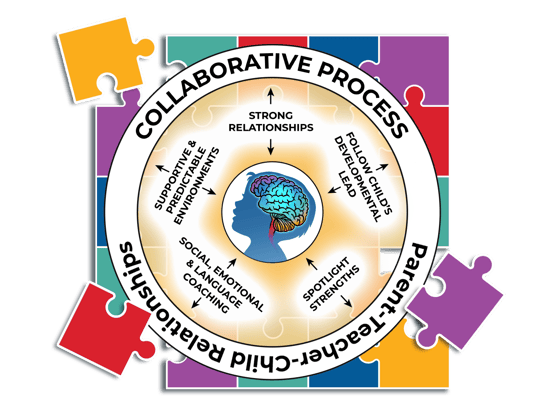
From the beginning, the Incredible Years programs were designed to partner with parents and teachers to understand and value these differences, build strong relationships, and support children’s social, emotional and cognitive development.
Our goal has always been to help adults recognize each child’s strengths, follow their developmental lead, and respond in ways that support their individual pathways of growth.
Over time, this collaborative philosophy — and the recognition that every child has unique patterns of language, social, and emotional development — has shaped the design of all the IY parent, teacher, and child programs in several practical ways.
Dr. Carolyn Webster-Stratton has written a new article on supporting neurodiversity in practice when delivering Incredible Years programs.
Read Dr. Webster-Stratton's new article: Neurodiversity and the Incredible Years (IY) Programs: An Evidence-based, Relationship-Centered Approach To Supporting Children’s Diverse Development
