Evidence-Based Early Intervention Training for UK Workforces
In recent years, we have come to better understand how adversity shapes children’s development—emotionally, socially, and biologically. These stressful or traumatic experiences are often referred to as Adverse Childhood Experiences (ACEs).
ACEs can include physical or sexual abuse, neglect, witnessing domestic violence, parental substance abuse, incarceration, loss of a loved one, separation or divorce, and exposure to disasters (e.g., the COVID-19 pandemic, tornados, floods or earthquakes) or war. For many families, the effects of COVID-19 are ongoing, with continued stress, disruption, and uncertainty affecting both parents and children.
Children exposed to these experiences may develop heightened fear, anxiety, aggressive behavior, or negative thinking patterns. In my clinical work, I have often seen that these children are also coping with loss of important relationships, which can deepen the impact of the trauma.
Research shows that higher exposure to ACEs is associated with long-term risks to both mental and physical health. Children with multiple ACEs are at increased risk for later substance use, involvement in violence, and other health-harming behaviors.
At the same time, I have seen these outcomes are not inevitable. When children and families are supported early with effective, relationship-based interventions, I have seen remarkable resilience emerge and developmental trajectories shift in positive directions.
What is Trauma-Focused Cognitive Behavioral Therapy (TF-CBT)?
TF-CBT is a well researched and empirically supported treatment for children and families that focuses specifically on reducing trauma-related emotional and behavioral symptoms.
TF-CBT is typically used when trauma is a primary driver of the child’s difficulties, and careful assessment is important to confirm this. One of the strongest predictors of positive outcomes is caregiver involvement and emotional support.
TF-CBT is a structured, short-term treatment (typically 12–16 sessions) delivered in parallel parent and child sessions, with joint sessions later in treatment. Treatment begins with building coping skills and gradually moves toward trauma processing.
Can Incredible Years® (IY) Programs Help Children Exposed to Trauma?
While TF-CBT directly addresses trauma processing, the Incredible Years (IY) Parent, Teacher and Child Programs were designed to address children’s cognitive, emotional, and behavioral difficulties, including both externalizing and internalizing problems.
Over several decades of developing and evaluating the Incredible Years programs, I have worked with many families experiencing significant adversity. It has become clear to me that trauma-informed principles are naturally embedded throughout these programs.
The IY programs are not a substitute for TF-CBT when trauma symptoms are primary.
Rather, they can:
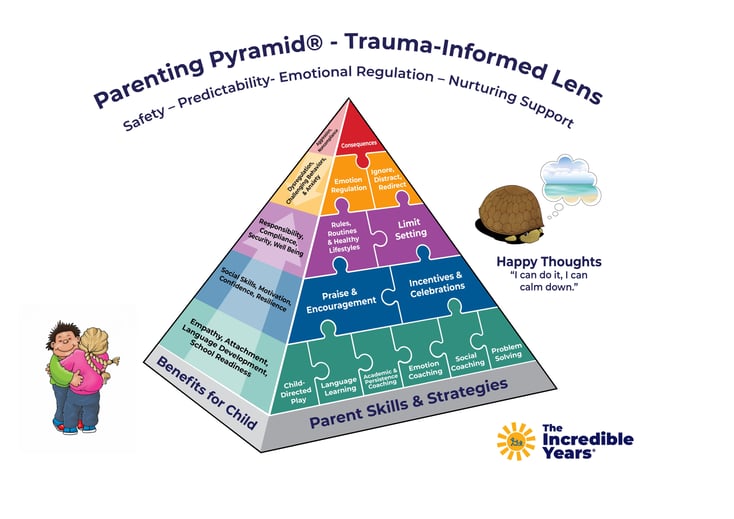
Incredible Years Program Developer Dr. Carolyn Webster-Stratton has written a new article on how the Incredible Years® Parent, Child, and Teacher programs can be used to complement Trauma-Focused Cognitive Behavioral Therapy to support children exposed to adversity.
Read Dr. Webster-Stratton's new article: Trauma-Informed Incredible Years® Approaches and Trauma-Focused Cognitive Behavioral Therapy (TF-CBT):Supporting Children Exposed to Adverse Childhood Experiences (ACEs)
